

Structural BIM in Action: The Future of Smart, Safe, and Efficient Structural Design
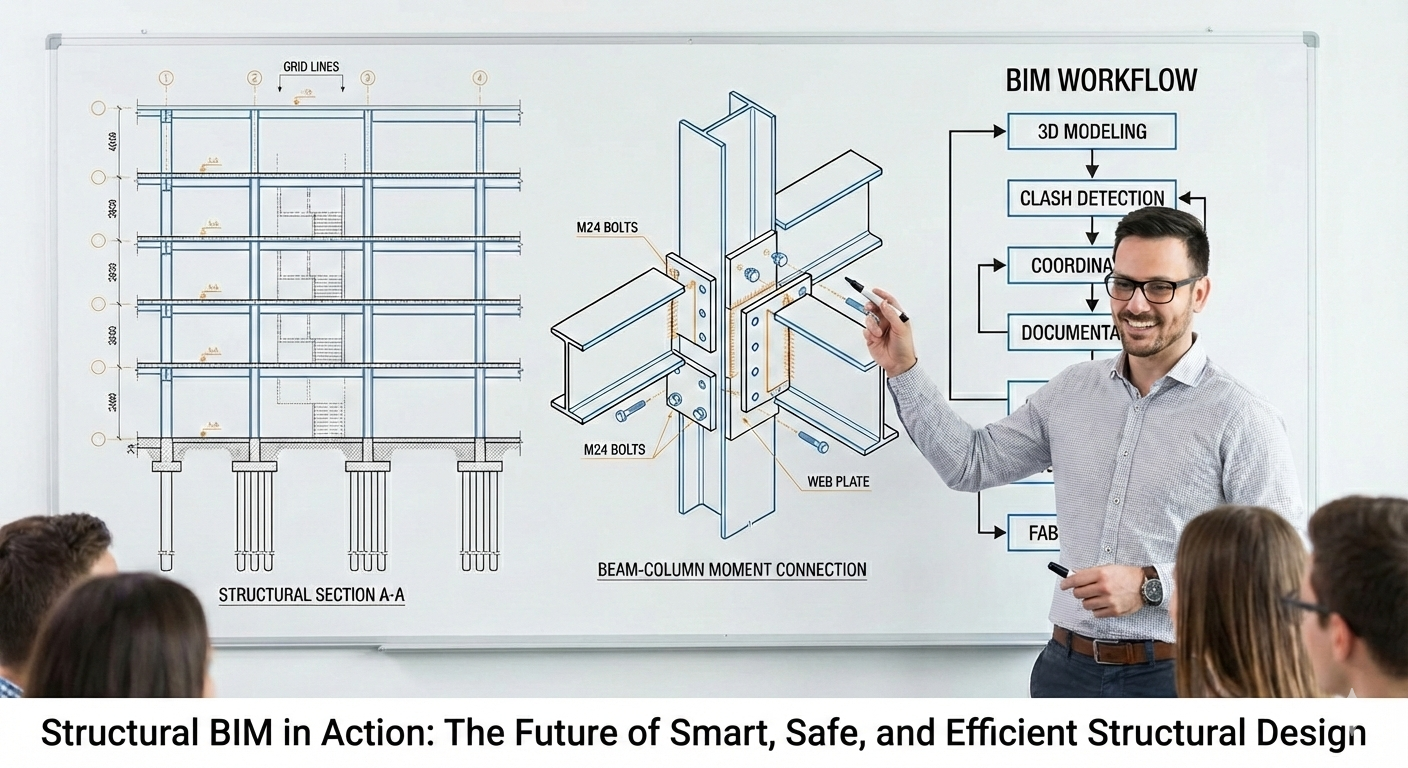
Structural BIM enables smarter, safer, and faster structural design with intelligent 3D modeling and collaboration. It reduces errors, saves cost, and improves construction quality...
Published On : 04 Feb 2026
In today’s rapidly evolving construction industry, traditional 2D drafting and siloed workflows are no longer enough to meet the demands of complex projects. The shift towards intelligent, data-driven project delivery has become inevitable — and at the heart of this transformation lies Structural Building Information Modeling (Structural BIM) — a process that integrates design, analysis, coordination, and construction into a powerful digital ecosystem.
At its core, Structural BIM goes beyond just drawing lines on paper — it creates rich, intelligent 3D models that contain the physical and functional information of a structure’s components — including beams, columns, foundations, slabs, and reinforcements — enabling engineers and stakeholders to make informed decisions throughout the project lifecycle.
What is Structural BIM?
Structural BIM refers to the application of Building Information Modeling specifically in the context of structural engineering — the discipline within civil engineering that ensures buildings and infrastructure are safe, reliable, and capable of withstanding loads. These BIM models aren’t static objects — they are digital representations enriched with data related to geometry, materials, load capacities, connections, construction sequencing, and more.
Unlike traditional CAD workflow where engineers work with flat drawings, Structural BIM integrates intelligence into every element of the design, allowing the model itself to “know” what each component is and how it behaves under different conditions.
Why Structural BIM Matters in Today’s Industry
1. Enhanced Accuracy and Fewer Errors
One of the biggest advantages of Structural BIM is the unprecedented level of detail and coordination it brings to structural design. Every change made in the model updates automatically across all disciplines, reducing discrepancies between drawings and ensuring structural elements always align correctly.
This reduces costly errors and rework — a benefit that becomes especially critical for large, complex structures such as high-rise buildings, bridges, or industrial facilities.
2. Improved Collaboration Across Teams
Structural BIM transforms isolated engineering silos into collaborative environments. Architects, structural engineers, MEP (Mechanical, Electrical, Plumbing) teams, contractors, and project managers all work on a single source of truth — the shared BIM model. This collaborative framework reduces clashes, encourages real-time feedback, and streamlines communication — a crucial advantage for multidisciplinary projects.
3. Better Visualization and Simulation
Using Structural BIM, stakeholders can see how the structure behaves before any material is placed on site — including load distribution, force paths, and how components interact with architectural and MEP systems. This enhances decision-making, improves constructability, and helps clients and non-technical stakeholders visualize outcomes more clearly.
4. Integration of Time and Cost Data
Advanced BIM workflows integrate not just geometric information but also scheduling (4D BIM) and cost data (5D BIM). This allows structural engineers and project managers to simulate construction timelines, forecast budget impacts, and optimize sequencing for cost-effectiveness and safety.
Core Structural BIM Tools and Software
To work with Structural BIM effectively, engineers rely on a combination of modeling and analysis tools. Some of the most widely used software includes:
Autodesk Revit – for parametric 3D modeling and coordination
ETABS – for advanced structural analysis of buildings
STAAD.Pro – for structural analysis and design
SAFE – for slab and foundation modeling
Navisworks – for clash detection and model review
AutoCAD – for traditional drafting alongside BIM workflows
Each of these tools feeds into an integrated BIM process, giving engineers flexibility to model, analyze, and export data that enhances constructability and performance.
Key Benefits of Structural BIM for Projects
1. Quality Control & Compliance
BIM models can incorporate building codes and design standards early in the planning stage. This ensures that structural systems comply with safety regulations and performance criteria before construction begins — saving time and avoiding regulatory roadblocks later.
2. Reduced Project Risk
Since BIM models identify clashes and design conflicts before they manifest on site, risk associated with rework, delays, and cost overruns is dramatically reduced. Structural BIM allows teams to forecast structural behavior under various load scenarios, including seismic and wind conditions, making structures safer and more resilient.
3. Enhanced Construction Planning
Contractors can extract precise quantities, material schedules, and sequencing plans from the BIM model. This improves procurement accuracy, minimizes waste, and ensures that the construction process flows smoothly.
The Role of Structural BIM in Careers and Learning
Structural BIM isn’t just reshaping projects — it’s reshaping skill demands in the AEC (Architecture, Engineering and Construction) industry. Employers today seek professionals who can:
Create and manage BIM models
Coordinate across disciplines
Analyze structural behavior using intelligent tools
Interpret model data for construction planning
This shift has led to an explosion of career opportunities for engineers who master Structural BIM workflows — from BIM Modelers and Coordinators to Structural BIM Managers and Digital Construction Leads.
Institutes like HPS BIM Institute offer structured online courses tailored to civil engineering professionals and students, teaching essential BIM tools (like Revit and Navisworks) and providing live project experience to help learners build robust portfolios and secure high-paying roles in global markets.
Conclusion
Structural BIM is more than a technology — it’s a new way of thinking about how structures are designed, delivered, and maintained. By enabling highly detailed digital models that integrate geometry, data, schedules, and cost information, Structural BIM empowers engineers and project stakeholders to work more collaboratively, efficiently, and transparently than ever before.
For aspiring engineers and industry professionals, mastering Structural BIM is no longer optional — it’s essential. With digital transformation accelerating across the construction sector, BIM skills open doors not just to better project outcomes, but to careers that shape the future of the built environment.